18/03/2026
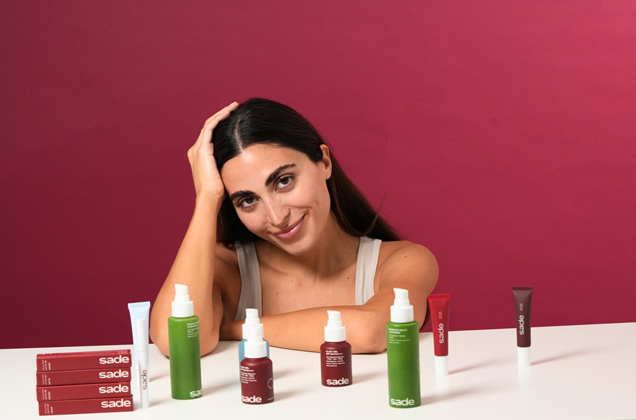
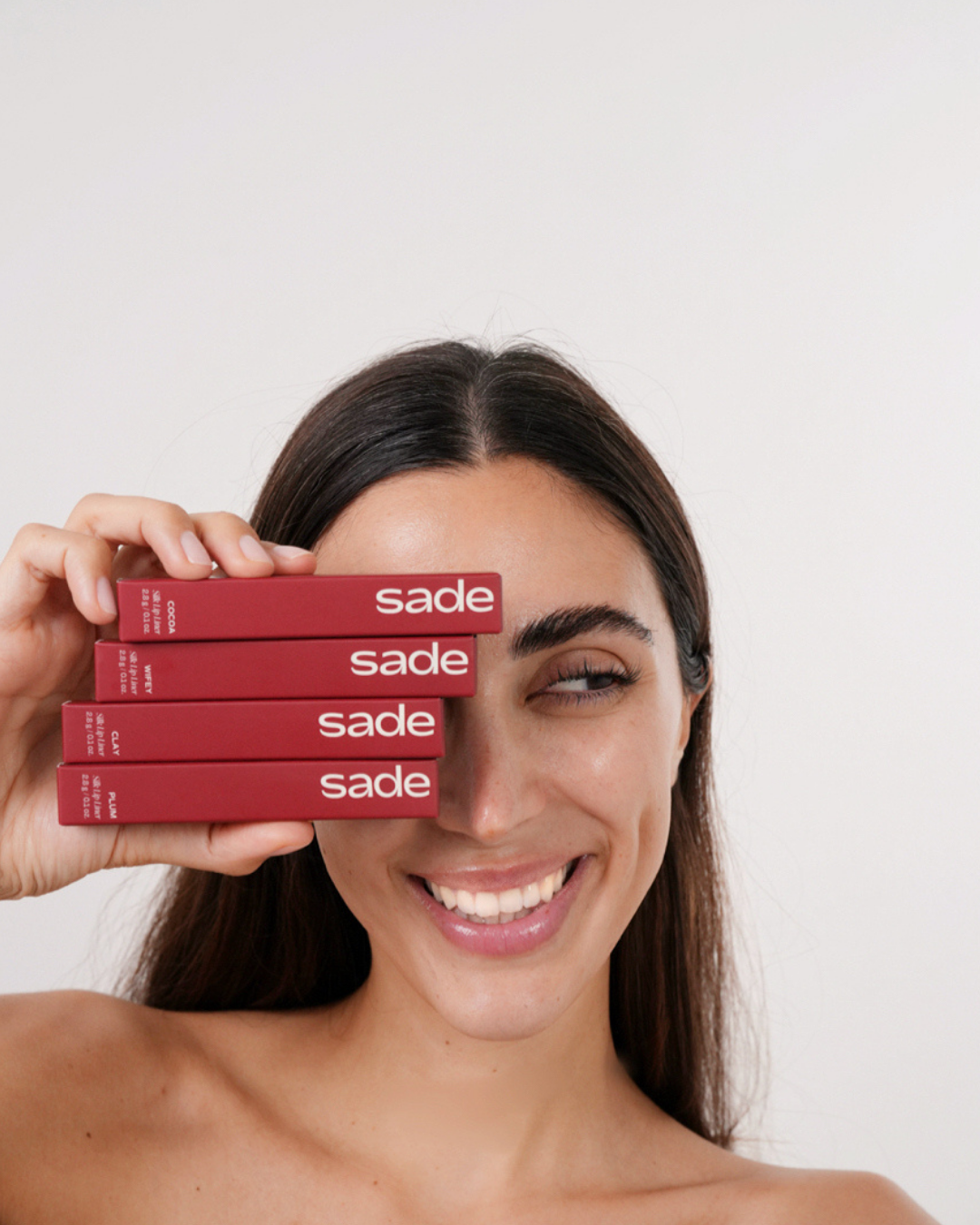
Ece Baltacı Mallak, a graduate of Sabancı University's Faculty of Engineering and Natural Sciences, Industrial Engineering Program, founded her own cosmetics brand, SADE, after gaining international experience at different stages of her career. Based in Dubai, the brand aims to develop simple yet effective skincare and daily care products that meet the needs of modern life. We spoke with Mallak about the origins of her venture, the opportunities offered by starting a business in Dubai, and the contributions of her education at Sabancı University to her entrepreneurial journey.
First of all, could you tell us a little about yourself? What did you do after graduation?
After graduating from Sabancı University's Industrial Engineering program, I continued my education abroad; I completed a master's program in International Management at Northeastern University in Boston and Università Cattolica del Sacro Cuore in Milan.
Throughout my career, I have taken on different roles in both startups and corporate companies at the intersection of strategy, brand and business development, international growth, and digital transformation. Today, as the founder of my own brand, SADE, based in Dubai, UAE, I develop simple yet effective skincare and daily care products that meet the needs of modern life.
How did your cosmetics venture begin? Can you tell us about the process of how this idea came about?
SADE actually arose from a very personal need. I was someone who lived a busy life, traveled a lot, and was in different climates. On the one hand, I was looking for minimalist, functional, and aesthetic products; on the other hand, I saw that many products on the market were either too complicated or not really suitable for daily life.
Over time, I realized that in modern life, people don't want ten-step routines, but products that really work, don't tire the skin, can be thrown in their bag and taken out, adapt to different weather conditions, and can be maintained in their routines. That's where the idea for SADE was born. I wanted to create a minimalist but strong brand with fewer but more effective products, focusing not on covering the skin but on making the skin feel good.
What is the main purpose of your venture, or what distinguishes you from other brands?
The main purpose of SADE is to offer effective, innovative, and multifunctional skincare products for modern life. We focus on developing products that not only "look good" but also actually work in daily life.
One of the most important points that differentiates us is our understanding of simplicity. We avoid unnecessary complexity, both in product development and brand language. Instead of multi-step, tiring routines, we offer simpler and more sustainable products that are barrier-friendly, climate-compliant, travel-friendly, and meet multiple needs simultaneously. So, SADE is not just a ‘skincare’ brand; it’s a “daily essentials” brand that adapts to today’s busy lifestyle.
You launched your cosmetics venture in Dubai. What were your reasons for choosing this city, and what opportunities did it offer your business?
Dubai was the perfect starting point for me, both because it's my hometown and because it's a truly multicultural, fast-paced, dynamic market that closely follows trends.
At the same time, the needs of the people living here are very clear: hot weather, air conditioning, intense city life, travel, and social life… All of these require more functional solutions in skincare. In addition, in the UAE and Saudi Arabia, women in particular have a very high interest in beauty, care, and wellness. There is an audience open to trying new products, discovering new brands, and investing in routines that make them feel good. This creates a very valuable space for startups with an innovative and strong brand story.
Another advantage of Dubai is its structure that opens up space for new brands and supports entrepreneurship. Pop-ups, retail experiences, community-based events, and digital growth opportunities are quite strong. Also, regionally, Dubai is a strategic center for expanding into the Middle East.
What were the first steps you took when establishing your brand?
The first step was to clarify why the brand existed. I started with a problem definition, not a product definition. I tried to understand which daily care needs people truly lacked. Then I focused on brand positioning, name, visuals, product categories, and target audience. For me, the most important thing from the beginning was not just to create "another brand," but to develop products that were truly needed, meaningful, and as original as possible. That's why I was highly meticulous in product and supplier selection. After that, we moved on to more operational stages such as formulation, manufacturer selection, packaging development, regulatory processes, website, content language, and launch plan. So, issues such as supply chain, logistics, pricing, and customer experience were at the center of the business from the very beginning, as well as the creative side.
During this process, did you experience anything that surprised you the most or that you didn't expect?
What surprised me the most was how many disciplines building a brand requires managing simultaneously. From the outside, most people see the product, aesthetics, and social media; but behind it all, there's a serious operation, regulation, finance, supply, crisis management, and decision-making process.
I've had the opportunity to work with many entrepreneurs and founders before, but when you start doing these things on your own, the awareness is completely different.
Another surprising point is this: no matter how good an idea you have, the quality of execution and sustainability are paramount. Creating a beautiful brand is one thing, but maintaining that brand consistently every day is another. Especially if you're a small team or a 'founder-led' structure, you need to get into every detail.
How did Sabancı University contribute to your entrepreneurial journey?
One of the biggest contributions Sabancı University made to me was teaching me systematic thinking. Instead of focusing on just one area, I learned to evaluate a problem from different angles. This is absolutely critical in entrepreneurship, because every day you face uncertainty, new problems, and quick decisions. Besides that, Sabancı's structure, which encourages free thinking, questioning, and connecting different disciplines, shaped my entrepreneurial perspective. Today, when building a brand, I think the same way: it's not just about producing a product, but understanding a need, establishing a system, and creating long-term value.
Which skills you acquired in university are most useful to you today when managing your business?
One of the most useful skills is analytical thinking. My Industrial Engineering education taught me how to look at data, optimize processes, solve problems, and use resources correctly. I use all of these skills directly today. Another important skill is building a structure. Creativity is very important when growing a brand, but it's not enough on its own; processes, planning, prioritization, and the right decision-making mechanisms are also necessary. This perspective I gained in university supports me in every area today, from operations management to product development.
How do you think Sabancı's multidisciplinary education approach influenced your perspective on your venture?
I think a multidisciplinary approach is a huge advantage for entrepreneurship, because when you're growing a startup, you don't know about just the product or just marketing; you need to consider all areas together, such as consumer behavior, strategy, finance, operations, branding, technology, and communication.
The education model at Sabancı gave me this flexibility. I learned to look at a subject not from a single perspective, but from a more holistic one. This helps me to structure SADE today not just as a cosmetics brand, but as a strong brand ecosystem and experience.
Did the network or alumni community you built during your university years contribute to your venture?
Absolutely. Both the relationships built during university years and the alumni community are invaluable on the entrepreneurial journey. Sometimes an exchange of ideas, sometimes reaching the right person, and sometimes just moral support can make a big difference. Especially on a path like entrepreneurship, which can sometimes make you feel lonely, being connected with people who have similar perspectives is important. I value the culture of Sabancı alumni supporting each other.
What goals have you set for your venture in the coming period?
My biggest goal in the coming period is to transform SADE into a strong and distinctive modern care brand, built by a Turkish woman founder from the region.
In the short term, our priorities include building a stronger community and customer loyalty online, as well as increasing our reach through selected physical sales points and collaborations. In the longer term, I want to make SADE a brand that resonates not only in the Middle East but also regionally and globally, a brand with its own language and world.
What advice would you give to Sabancı University students or recent graduates who want to start their entrepreneurial journey?
My first piece of advice would be not to wait for the perfect idea. Often, what matters is not whether the first idea is perfect, but whether it solves a real need and how determinedly you bring it to life.
Secondly, starting small and learning quickly is very important. Instead of trying to build everything perfectly from the start, it's healthier to progress by testing, getting feedback, and improving.
I would also say that entrepreneurship is not just about inspiration, but also about resilience. There are many times when you struggle, get tired, and encounter unexpected problems. Therefore, it's necessary to invest not only in your idea, but also in the discipline and patience to sustain it.
Finally, I would like to say this: Don't judge your own path according to the pace or path of others. Every career and every venture grow at a different rhythm. What matters is knowing why you are establishing what you are doing, believing in it, and remaining true to that vision.